MAURICIO MADELAT
A Bureaucrat with Paintbrushes
Mauricio Madelat was born in Mexico, although he has never believed that the place of one’s birth should determine the territory of one’s ideas. He has lived in more than a dozen countries, traveled through over forty, and devoted a large part of his life to asking questions—especially those whose answers we would rather not know.
His relationship with art began long before he studied Fine Arts. He grew up surrounded by books, classical music, opera and a mother who inoculated every vital experience with a manifesto. As a child he would read a book a day. Later he discovered Henry Miller’s Tropic of Cancer and committed one of those recklessnesses that end up defining a life: convincing himself that to be an artist he had to go to Paris.
So he went.
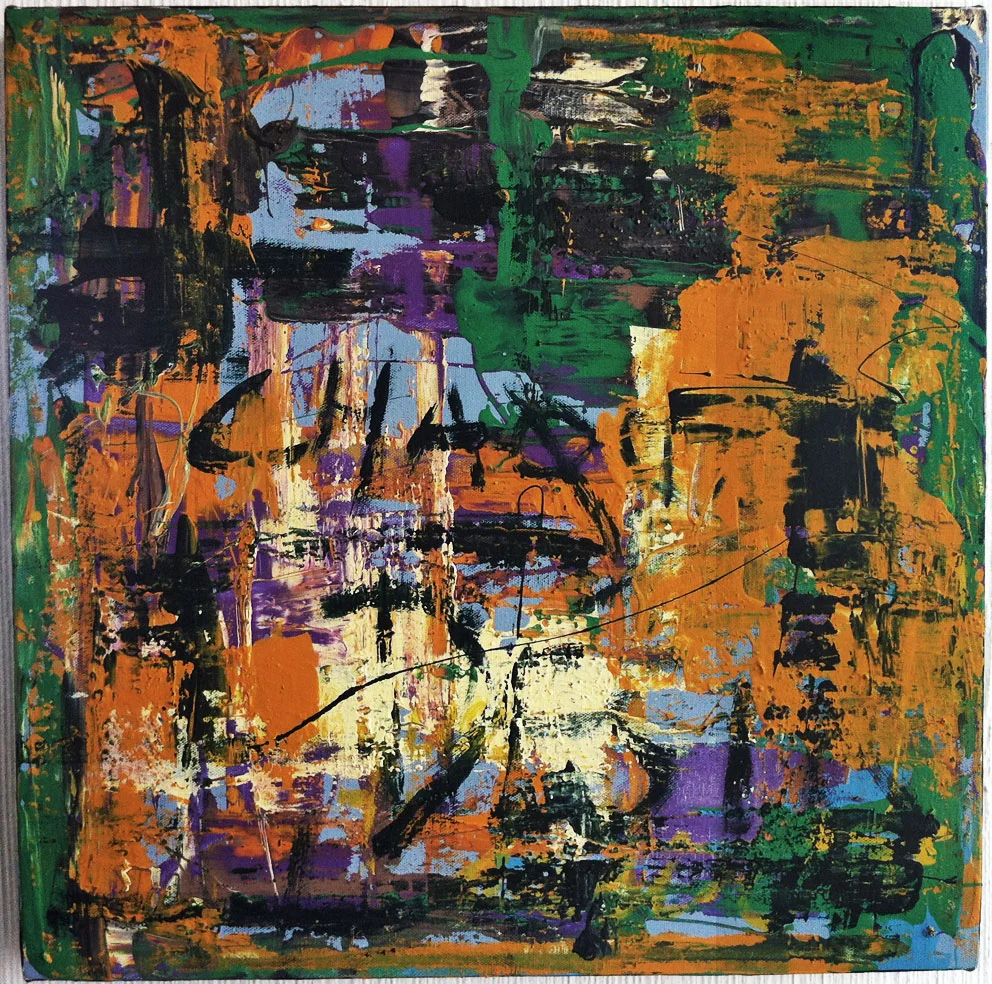
He studied at the École des Beaux-Arts and later museography and curatorship at the École du Louvre. He also studied philosophy at UNAM, cinematography in Mexico, New York and Cuba, fresco techniques in Italy, and Greek philosophy and mythology in Corfu. He is currently studying Engineering in Artificial Intelligence. There still seem to be many unresolved questions, and he has not yet found a convincing reason to stop studying and probing the unknown. He probably won’t find one…
He has painted, sculpted, photographed, written, acted and directed. His work has been shown in several countries, including a retrospective organized by the Instituto Nacional de Bellas Artes of Mexico, as well as participations at Art Basel and Zona Maco. He also founded Karma Lab Films and has devoted a significant part of his career to filmmaking. Lately he explores artistic creation through artificial intelligence—not out of technological devotion, but because the urge to probe the unknown and to exploit the power of new tools for making art excites him.
But behind that apparent dispersion there is a fairly consistent obsession: the human condition and its contradictions.
Madelat distrusts certainties, packaged truths and, especially, clichés. He considers art a territory for exploration, questioning and reflection, not a factory of recognizable objects meant to reassure the collector.
He has always maintained that an artist who finds a successful formula and devotes himself to repeating it ends up turned into a bureaucrat with paintbrushes. He changes canvases, sizes and prices, but keeps filling out the same form. The difference is that now he signs it.
“ An Artist doesn’t just create Art, but an extraordinary way to look into the ordinary”
That kind of stability neither excites nor interests MADELAT.
His works are born from philosophical reflections, emotional experiences, literary and philosophical discoveries and questions that rarely offer comforting answers. Simone Weil, Cioran, Lipovetsky, Cavafis and others have provoked some of the explorations in his series. Others have arisen from less literary experiences: loss, emptiness, ruptures, fragility and that extraordinary human capacity to pretend we are still whole when long ago we have been shattered.
In Collecting the Pieces and Broken, for example, he explores how experiences fragment us and how we spend our lives trying to rebuild ourselves. In From Fear to Faith, born during the pandemic and marked by personal losses, he addresses fear and the various forms of faith we cling to in order to continue existing.
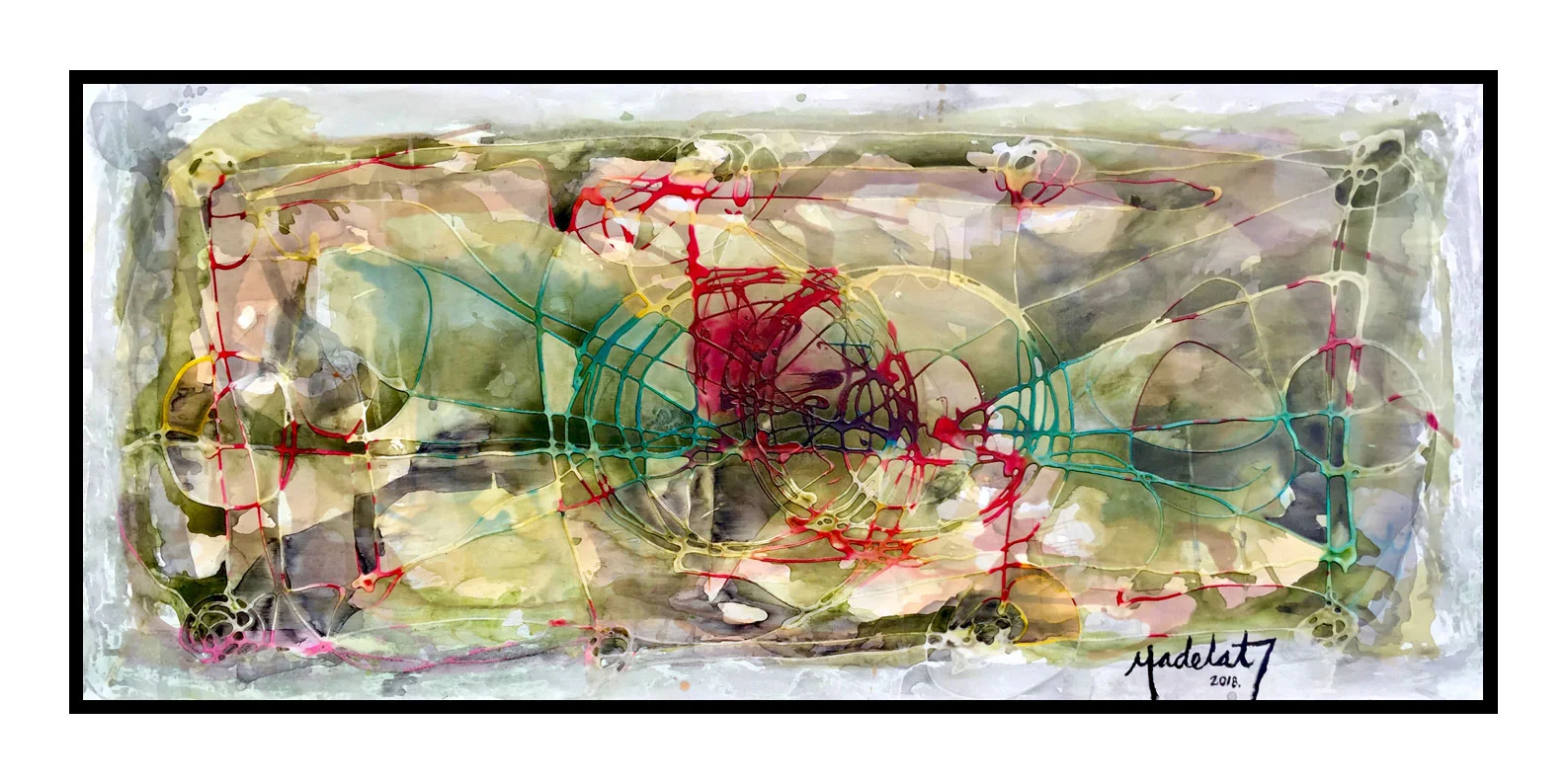
There aren’t many flowers or apples in that universe. And when there are, it’s wise to be wary of them.
“From corpses grow flowers”
Madelat does not believe art has an obligation to please. Much less to console. He is interested in unsettling, confronting, provoking a fissure in the viewer’s convictions. His reflections can be pessimistic, biting or deliberately stony, but hardly complacent. He prefers a work that forces someone to question something to one that matches perfectly with the sofa.
“There’s no such thing as a beautiful painting about nothing”
He also does not believe an artist must remain faithful to a single technique, material or style. Fidelity to a formula can be very profitable, but often quite distant from the manifesto of a true artist and his creation.
For him, the questions come first. Then the emotion, the reflection and the images that begin to form in his imagination. Only then does the material arrive: paint, metal, photography, sculpture, film or any other language capable of expressing what he needs to say.
His purpose is not to produce beautiful objects, although sometimes they are. It is to give body to the incorporeal: to turn into matter that which normally remains trapped in thought, memory or emotion.
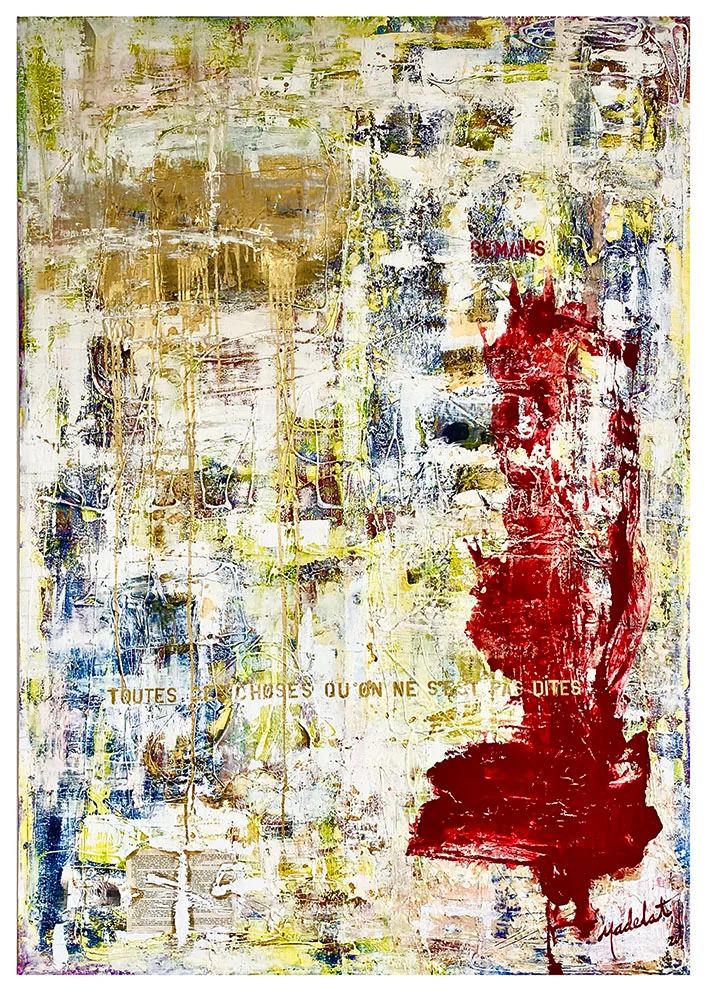
After so many countries, disciplines, books and questions, he still hasn’t found a definitive explanation for human existence.
Fortunately.
Because the day he believes he has found all the answers, he will probably stop having anything interesting to say.
And the last thing the world needs is another bureaucrat with paintbrushes.